

My journey started in my Endocrinologist’s office, having yet another disappointing discussion on how my body isn’t absorbing normal medications, and how my pain is just not being relieved. My genetic makeup is of such that most pain medications like Codeine, Benzhydrocodone, Buprenorphine, Hydrocodone, Methadone and Morphine do not work as my body hyper-metabolises the drugs or have decreased conversion with them. This leaves me with very little options for pain relief. I have similar problems with a lot of other medications including those used for Depression, Anxiety and PTSD.
As we went through the various options, he looked at me and said that perhaps I should try Ketamine Therapy but, on the side, he said, “but you didn’t hear this from me”. Confused and annoyed, I left his office with the all too familiar feeling of disappointment that there might be a treatment option out there for me, but my doctor isn’t willing to prescribe or speak to my other doctors that can help. Once again, it’s up to me as a patient to do the research and to self-advocate.
Armed with my research I approached my psychiatrist with the question on Ketamine and she was just all too happy to assist. She discussed the benefits of pain relief with me, but also that of the psychological benefits of the therapy.
Ketamine Therapy helps with pain relief as well as its many psychological benefits by rapidly upregulating neuronal production and release of BDNF (brain-derived neurotrophic factor). According to Dr. Casey Paleos, BDNF has been called the fertilizer for the brain. BDNF is a protein that helps promote the growth, maintenance, and survival of neurons—in other words, it enhances neuroplasticity.
As a person who loves research into the bio-psycho-social sphere of psychology and especially that of neuropsychology, I was keen to try this – anything that can help my brain regenerate cannot be a bad thing, when used correctly.
A little nervous and unsure what to expect I went for my first infusion. At this clinic there is a quick 10min screening regarding health and why I am coming for the therapy. You get your own cubicle with headphones and a playlist to listen to, an eye mask, blanket, and recliner chair. I was reassured that the two nurses and anaesthetist will keep a good eye on me. In my case there was a debate on the use of Ketamine due to my heart. It took a few months of back and forth for me to get my heart cleared for safety, by my cardiologist and other doctors. So, needless to say, we were all just a little nervous. I also have Raynaud’s disease so finding veins for the infusion (especially as I started in winter) was a challenge, and it still is. Ketamine as a medication has its side-effects and risks and is therefore not suitable to everyone.
As the infusion starts, I immediately feel the now all to familiar feeling of my lips starting to tingle. I get transported to the most beautiful space that looks like a combination of the deep blue sea at depth and the milky way full of stars. A whale meets me and immediately puts me at ease while I hold onto its fin as it guides me into the unknown realm of Ketamine. Around me is the most beautiful jellyfish and a turtle arrives. Turtles have great meaning to me and is my favourite reptile. The colours and messages that arrive puts me at ease. As I awake from my journey, I feel light, refreshed with newfound capacity. I do make a note that I need pillows to support me in my chair next time, as my hypermobile body just needed that extra bit of comfort and support. I also felt really cold, so I make a note to bring an extra blanket and warm socks.
When you start Ketamine therapy it is usually 6 sessions, a few days apart from one another, over two to three weeks. Every session brings new insights, visuals, and makes me aware of things I need to work on. But the capacity for life the infusions gave me was lifechanging. I made sure I worked with my therapists through this, and I set intentions for myself in every session (sometimes my intentions worked and other times my brain had its own mind). The ketamine therapy came at a time in my life where I desperately needed it, as so many things were happening at this time, both health wise and some personal family trauma. To this day I believe that I only handled these events so well due to the capacity the Ketamine gave me. The sessions started giving some neural pain relief; although not as much as I would have hoped, but I also was not on the pain therapy and dosages. I also quickly learnt that there were elements to the playlist I was listening to that was not serving me as well as it could. My Music Therapist and I quickly went to work on personalising my playlist and this is where a whole new world opened up for me.
Music makes a huge difference in the Ketamine journey. It carries you and guides you. The music holds you in the journey and provides a sort of safe passage. If done incorrectly it can be detrimental to your journey. If the music is not right it can change how you experience the session. If the music is to heavy or deep and does not resolve it can leave you anxious or depleted.
After my first 6 sessions I was told that due to my chronic psychological and pain conditions I can continue with maintenance therapy. My doctors and I decided that I could go every two weeks to start with. During my sessions my Music Therapist had found another clinic that was close to my home and that seemed a lot more suited to my personality and needs. It turned out she was right, and this is where the next part of my learning journey began.
What made this new clinic different was the setting. It was tranquil, inviting, calm and you could see it was a place of safety and privacy. The practitioners were well informed about the different elements of psychedelic therapy. The initial interviews were extensive both from a clinical psychological evaluation but also from the medical perspective. The whole onboarding process took two hours as well as some homework. This put me right at ease.
For Ketamine therapy to work there are a few things that need to be in place. You need to be comfortable. For me it means pillows, my own eye mask (mine is weighted), my own blanket with the right textures, comfortable clothes and I want to be nice and warm, so I have comfy socks.
The people around you also matter, you need a good therapist to guide you before and after. In my case it was my Music Therapist. The integration with Ketamine is the most valuable part. Setting goals and intentions and linking the thoughts and processes after the infusion cannot be underestimated. The healing only happens if integration is a part of it. You need to do the physical and emotional work before and after.
Integration is different for everyone, for me I found that it must happen as quickly as possible after my infusion, as life happens to me and so in between infusions to many things happen and then my journey gets lost in everyday life. Journaling and writing down my journey helped with this. I loved the fact that I had a private space at the new clinic to be able to do that.
I also combined my therapy with Guided Imagery and Music (GIM), art and other therapeutic modalities. At the new practice they have a psychologist that does the integration with you before and after your sessions. For me this didn’t work for a couple of reasons. For one, I had no relationship with the psychologist and therefore the person did not understand my background and language as well as it should have been for the integration to really work. Secondly, the integration sessions after my Ketamine happened to far apart and therefore the sessions were less about the Ketamine and it just became a normal psychology appointment.
I believe if Ketamine integration therapy is really going to work, you need to trust your therapist/psychologist and have a long-standing prior relationship with them. Even for pain patients this is vitally important. Your therapist needs to understand the contexts, language and nuances that link certain imagery or words that come up in your journey. I would thus suggest to have a few therapy sessions before your infusion therapy, to get to know one another, or to use an existing therapist.
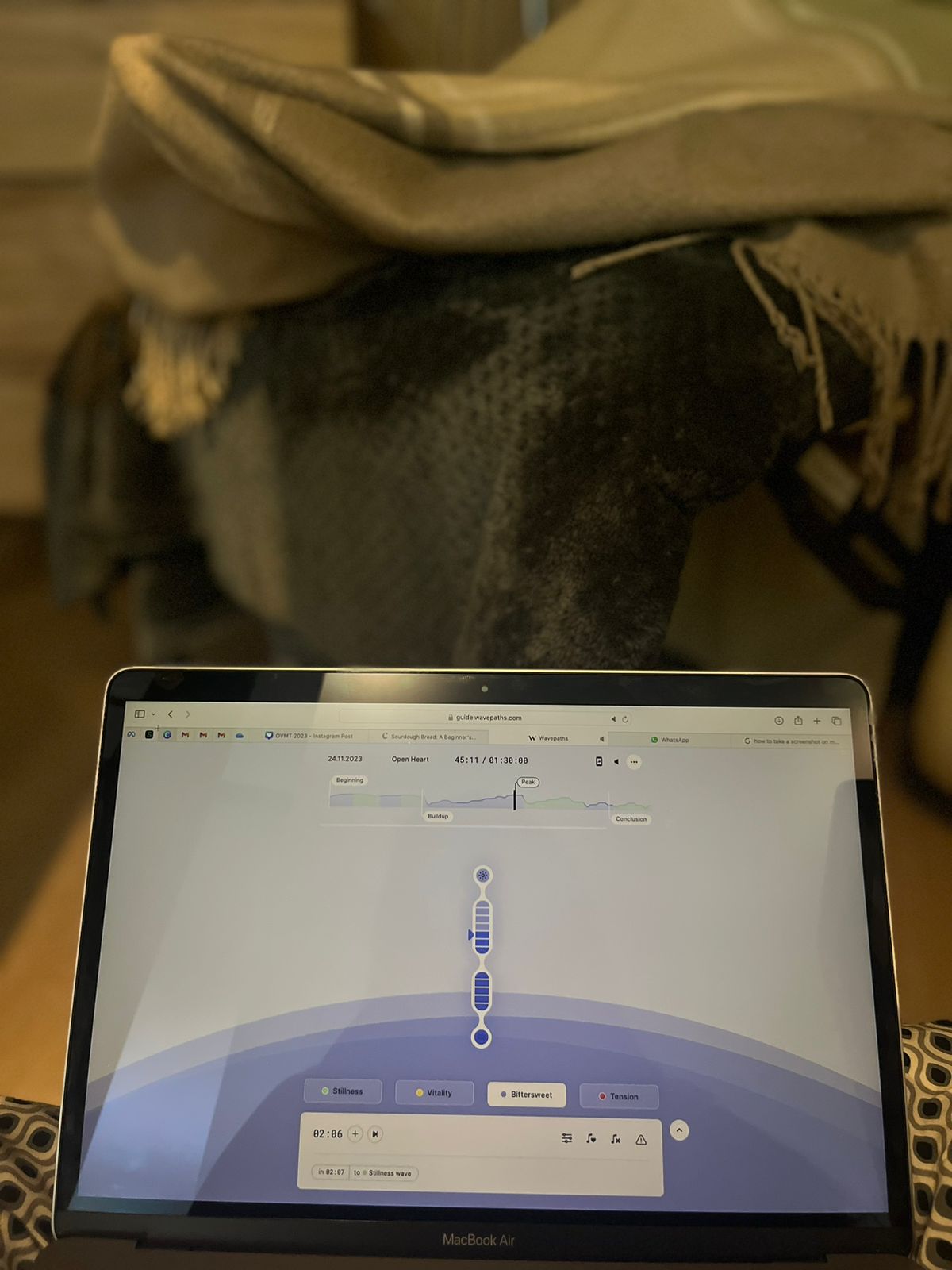
Since the start of my Ketamine therapy a lot has adapted and changed, and I cannot be more thankful for the people that are part of it. My sessions now look very different, not only have I moved to 90min pain infusions, but my Music Therapist sits in on my sessions with me. It’s become a science. She listens to the music with me, tracks my heart rate, my movements, my blood pressure, and my facial expressions with the music. This has given us invaluable information as to how the music guides and helps me. She is there if I come out too early or want to ask a question. We share special moments together and she is there to help me if a tough patch arises. We know each other so well that she can pick up on a word or tiny movement and know that its important. This makes the discussions so much deeper after my sessions.
As a patient that has experienced different levels and practices of Ketamine Therapy, I now know there is so much more to the therapy than just the infusion and listening to some music. It’s a science and for it to really work there needs to be thought and process. You need to do the work. It is not as simple as just showing up for an infusion and then you feel better and have no pain or your depression or PTSD is relieved. Like everything in medicine, as a patient, you must do the work. There is no difference between psychological pain and physical pain, both is made within the brain. There is an integral link between the interplay of psychological and physical pain. Ketamine can help with both, but how you get there is not an easy one “size fits all journey”.
Ketamine has to this date been the single most important part of my healing journey; as well as my Music Therapy. I truly believe that how my team and I have approached the therapy and continue to adapt and evolve is what has made it so successful. This is by no means discounting my other therapies and medication. This approach has been a combination of multiple modalities working together.
So, what has ketamine done for me? It has given me capacity to breathe and reset. It has given me deep perspectives of what I want and need from life. It has helped me deal with trauma and relationships in ways I would not have been able to do consciously. I truly believe there is an element of neuroplasticity that takes place, each session and work done in-between building on one another. The part I found the most fascinating was how the music used in my sessions when played in the car helped me reconnect to certain thoughts and feelings. I could use the music to help me regulate. It’s as if a bridge had been built in my brain, to me this was clear evidence of the neuronal production and regrowth that was taking place. It has helped reset some pain receptors which has led to longer pain reduced or pain free periods.
In a nutshell if you want to start or try Ketamine therapy these would be the most important take-aways for me:
- You need a long-standing relationship with your therapist/psychologist.
- You need to be comfortable with your infusion venue and team.
- Music matters and needs to be tailored to your needs.
- Integration is vitally important before and after.
- Why and how you do the therapy matters.
- You must be open to what your brain brings you, good or bad, and must work on it.
- Lean into the process.
- Multiply modalities and adaptations is needed to get what works for you.
Until next time…

Disclaimer:
This article should not be used as medical advice, and you should always consult with your medical team. If you are in a life-threatening situation, please get immediate help and advice from medical practitioners.


